
Agricultural Storage Buildings for Midwest Farms & Operations
Machine sheds, grain storage, hay buildings, and livestock facilities — post-frame agricultural buildings built for how you actually farm.
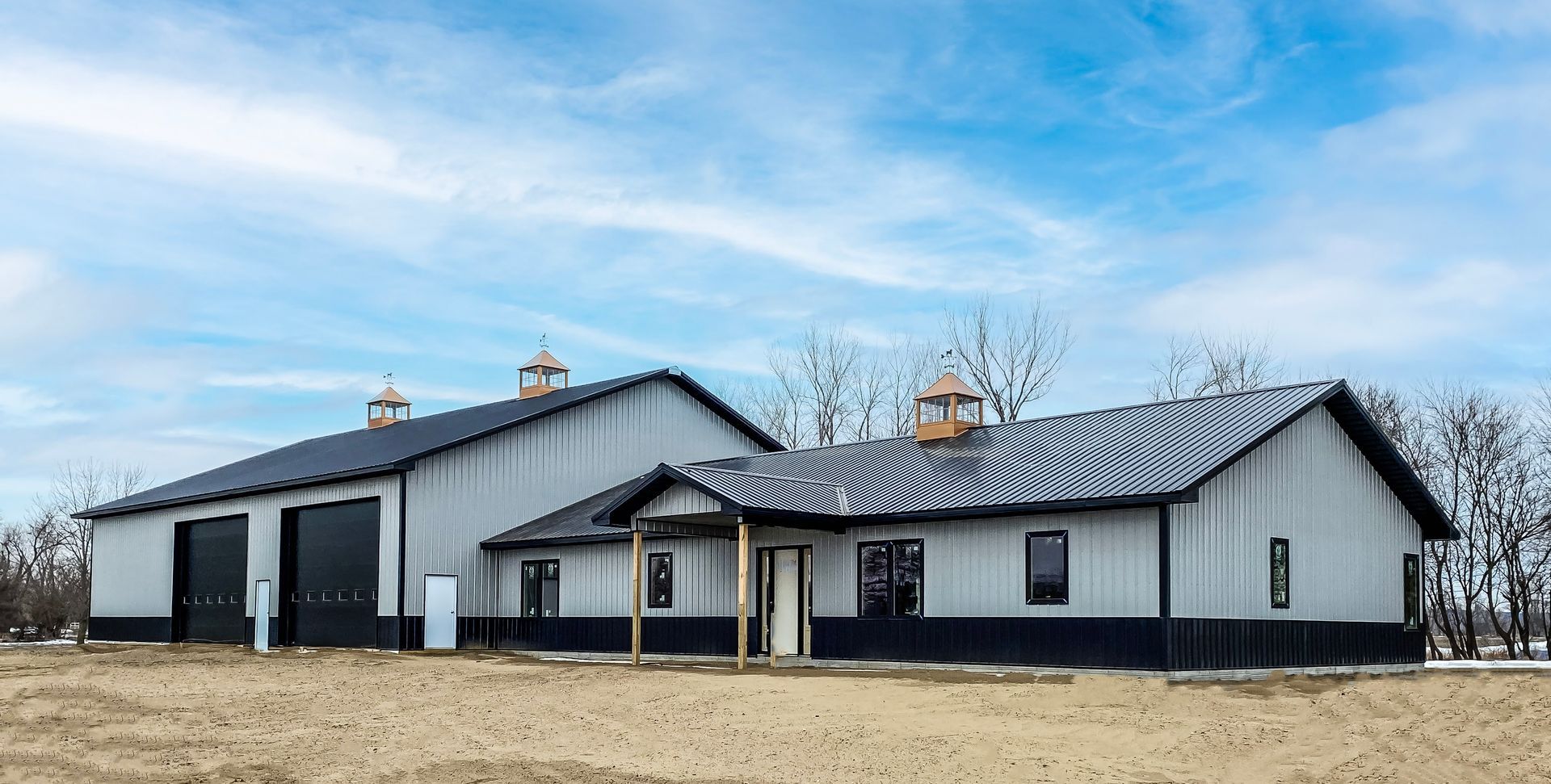
Iowa-Based · 5-Year Warranty · Engineered for Midwest Wind & Snow Loads
Farm buildings do real work. They protect equipment that costs more than most houses, store commodities that represent a year of income, and house animals that depend on the structure to keep them dry and comfortable through a Midwest winter. The building you put on your operation needs to be built to those standards — not to the minimum that still qualifies as a barn.
Gingerich Structures has built agricultural storage buildings across Iowa, Nebraska, Kansas, Missouri, Minnesota, South Dakota, Wisconsin, Wyoming, Colorado and the surrounding states. We understand what a modern combine requires in terms of door height and interior clearance. We understand the difference between a machine shed floor that holds up under loaded grain wagons and one that doesn't.
We've built enough hay storage to know that roof pitch and overhang placement matter more than most people realize when you're trying to keep moisture out of a thousand bales.
Every agricultural building we design starts with a conversation about what you're storing, how you access it, and what you've been working around in your current setup. Then we build something that solves those problems — not a standard template with your name on it.
Building Types
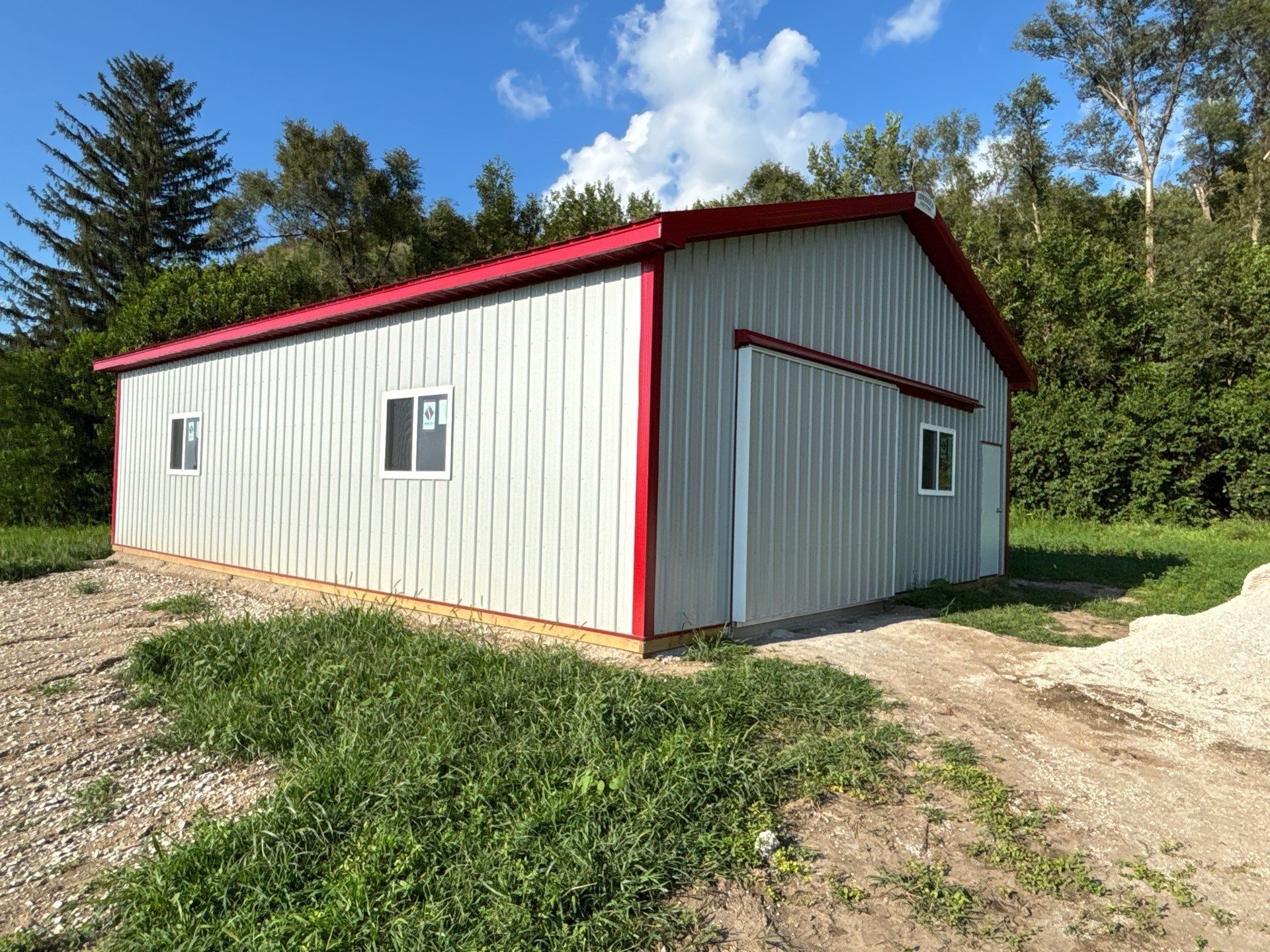
Grain & Commodity Storage
Ventilation bays, concrete aprons, grain bin surrounds, drive-through configurations
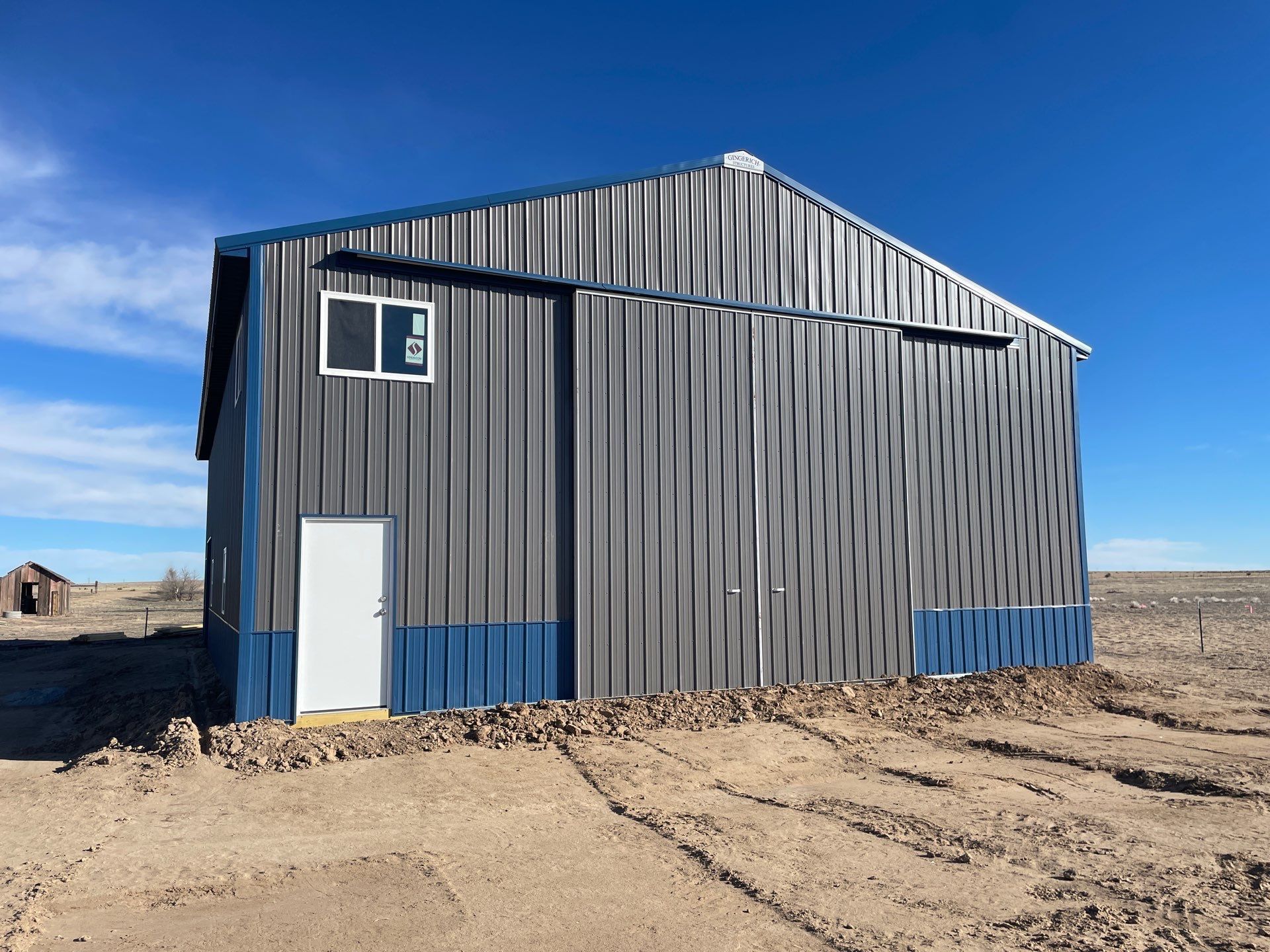
Hay & Feed Storage
Open-front or enclosed, gravel or concrete, eave heights for loader clearance, roof pitch for runoff
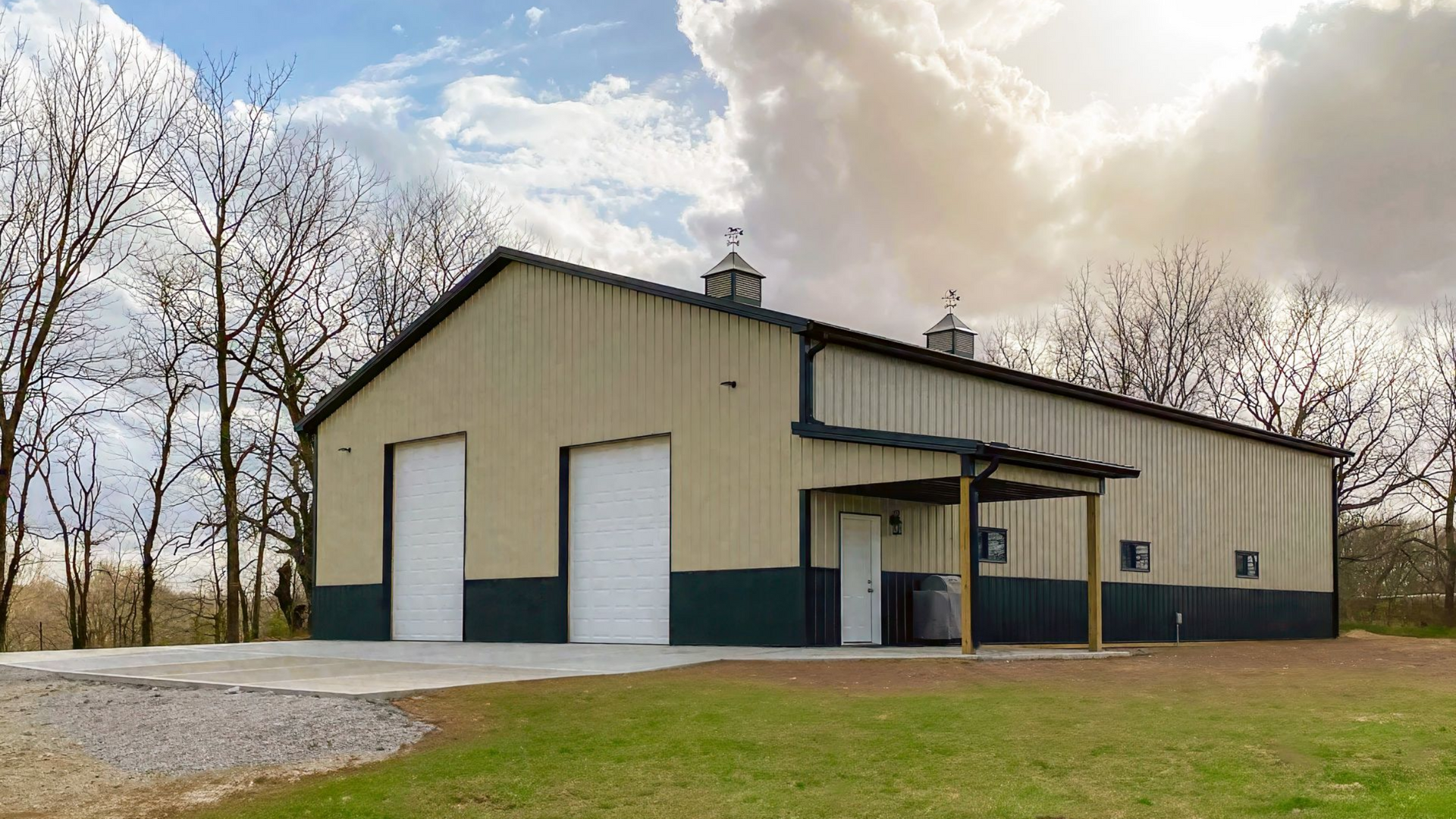
Implement Building
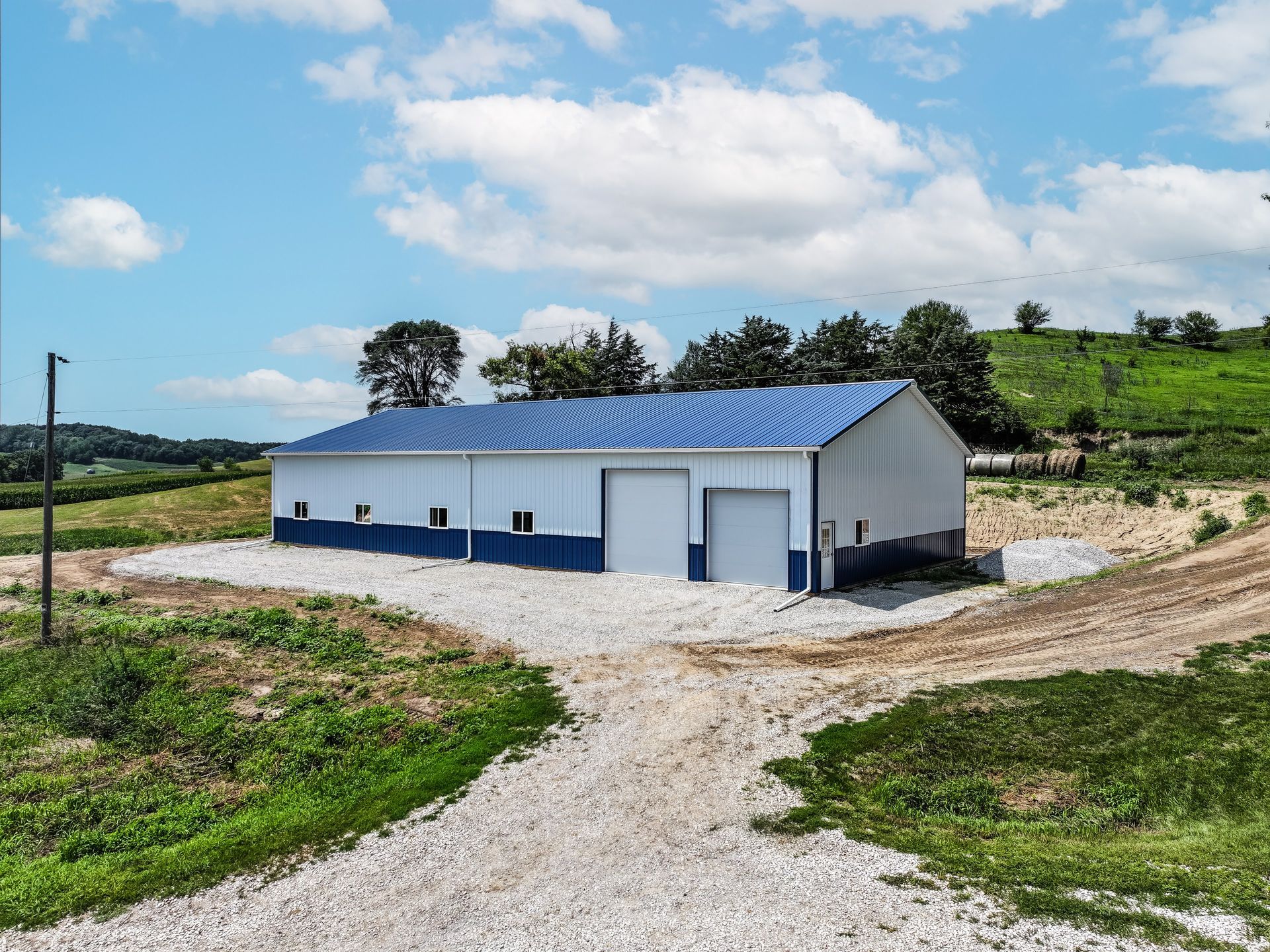
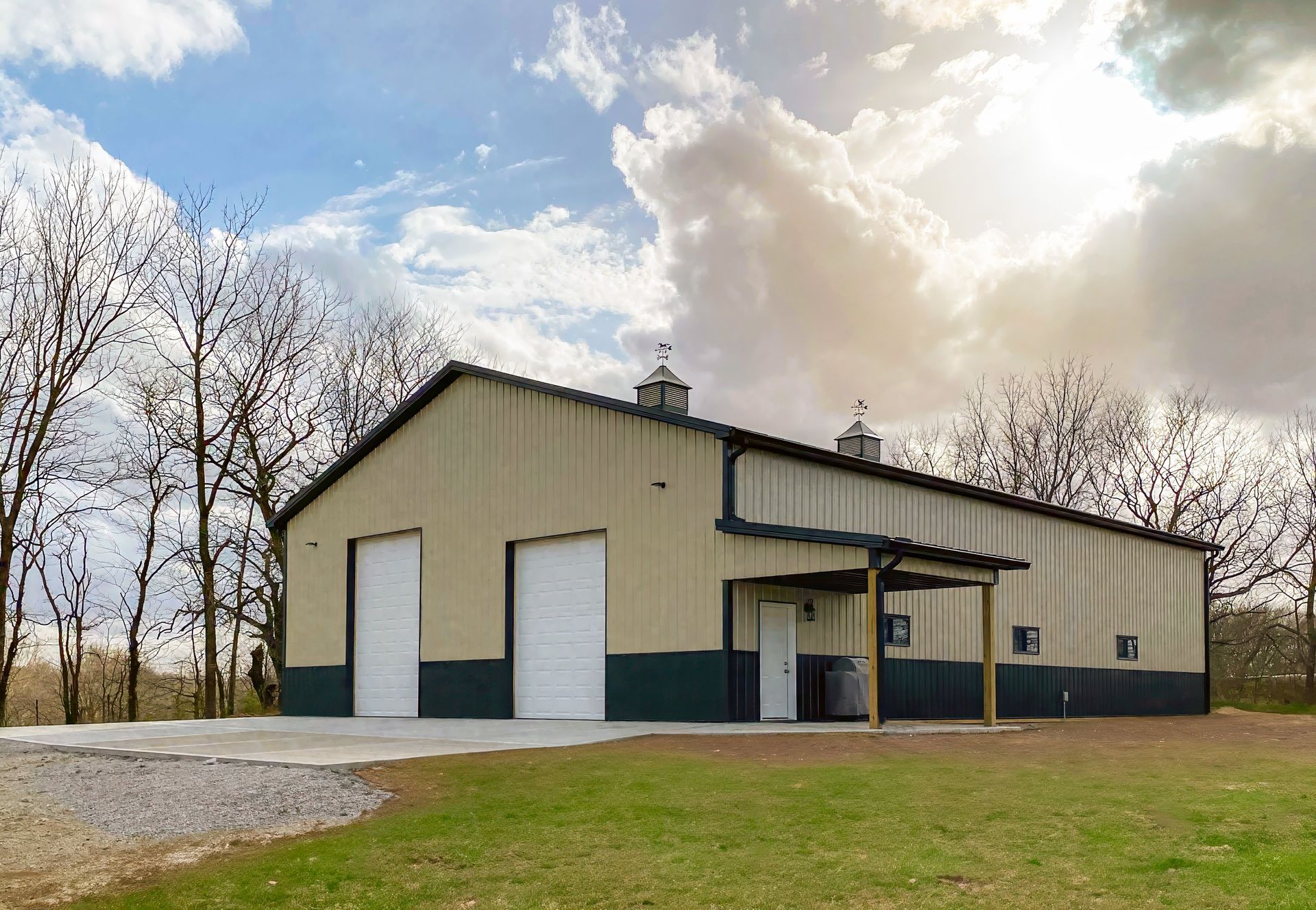
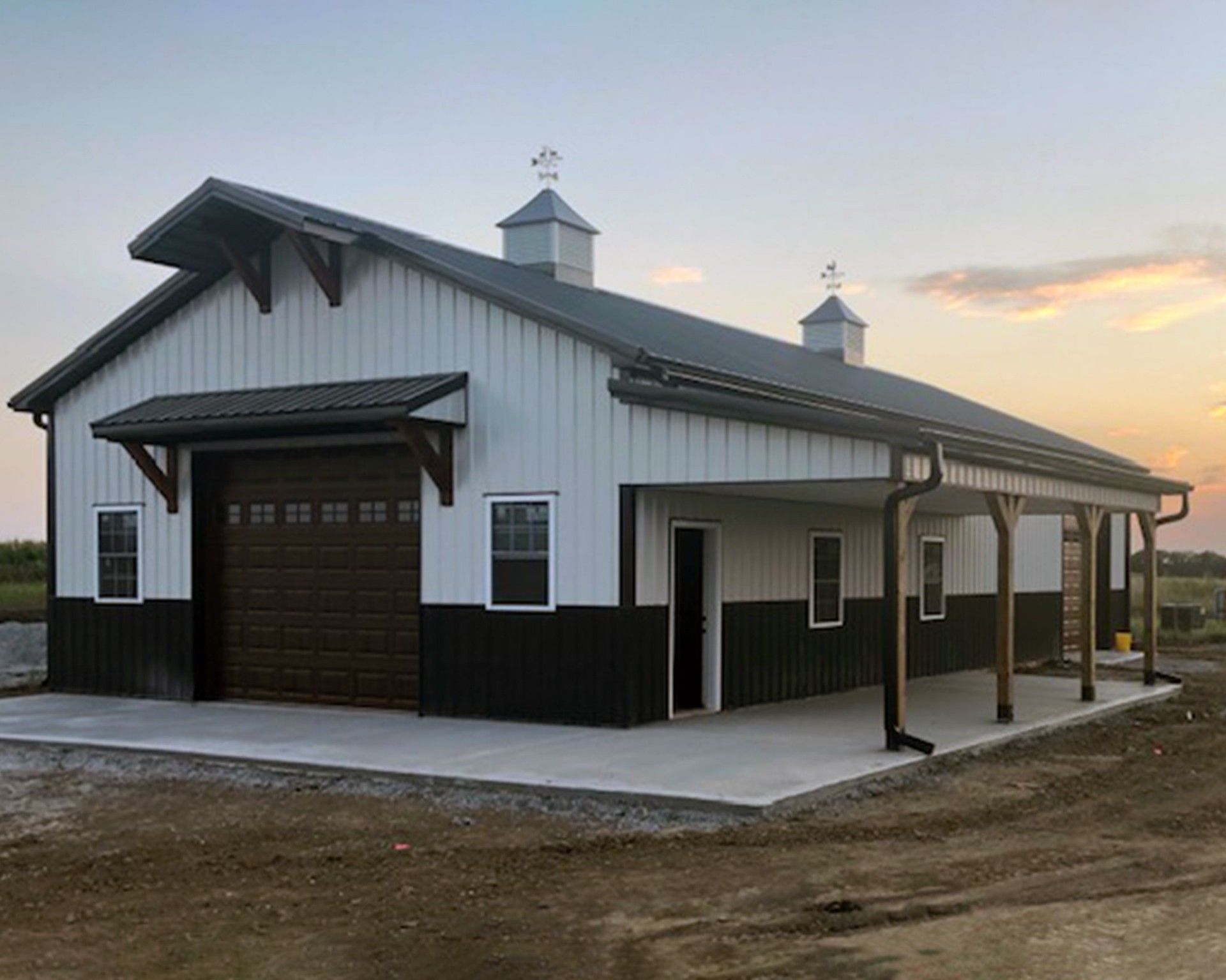
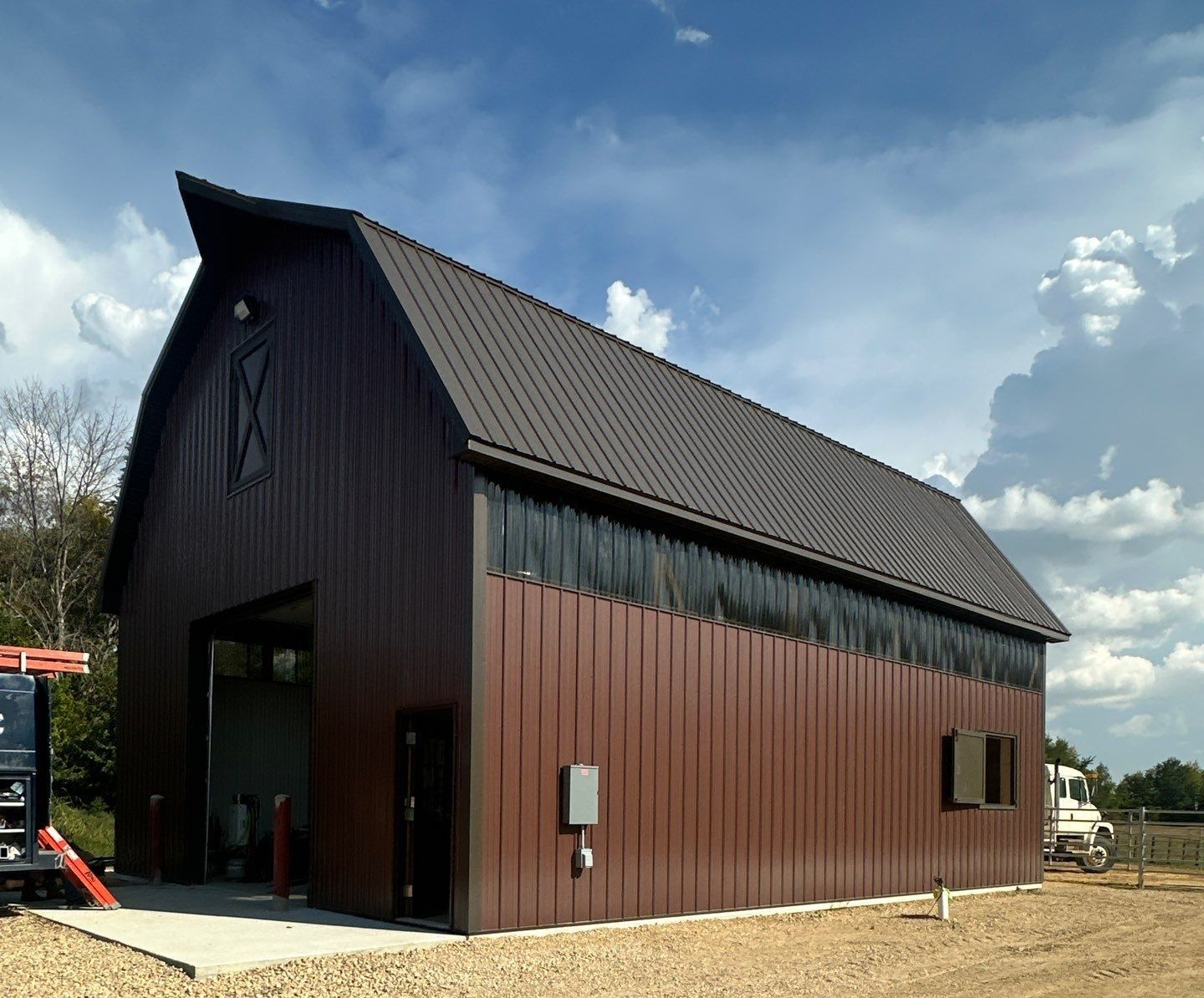
Wide sliding or hydraulic doors (16–20ft+), tall clear heights for combines and high-profile equipment, concrete floors, LED lighting
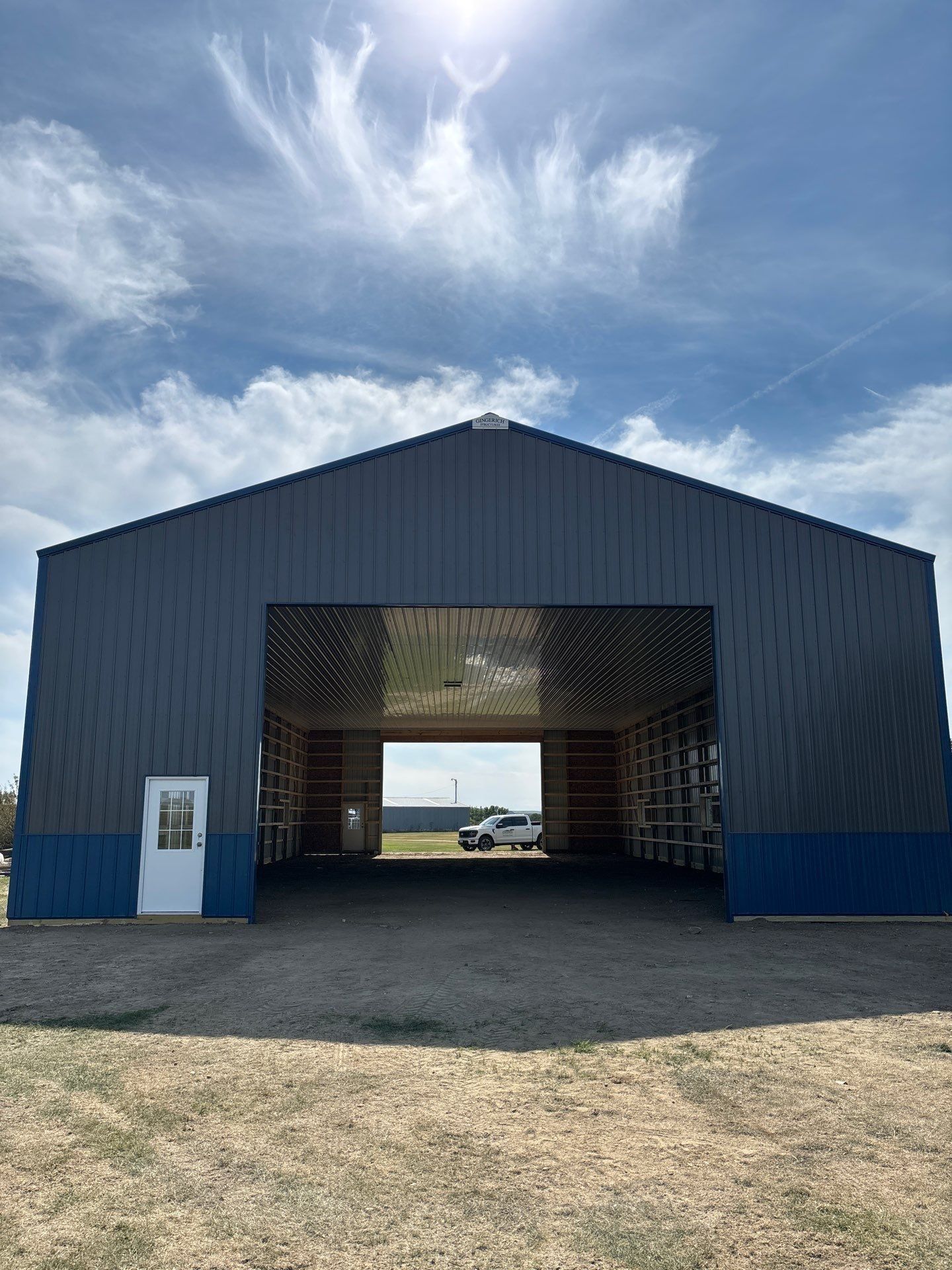
The single most common regret we hear from farmers who built their own building is that the doors aren't big enough. A door that fits your current combine may not fit the one you buy in five years. A door that clears your header with two inches to spare isn't clearing it — it's one bad approach away from a repair bill.
Our recommendation: measure the tallest point of your tallest piece of equipment. Add two feet of clearance. That's your door height. For width, measure the widest attachment you own — including mirrors on tractors and the full folded width of your header — and add four feet. Then we talk about whether a sliding door, a bi-fold hydraulic, or a drive-through configuration makes the most sense for how you move equipment in and out every day.
- Standard sliding doors: 16×14ft, 20×16ft, 24×18ft
- Hydraulic bi-fold: up to 60ft wide for drive-through setups
- How to measure: tip height + 2ft clearance, width + 4ft for mirrors/headers
If you're not sure what you'll be running in ten years, build for the bigger door now. Adding door height after the fact is one of the most expensive modifications you can make to an existing structure.
Frequently Asked Questions
Do I need a permit to build an agricultural storage building?
Agricultural buildings are generally exempt from the state building code, but county zoning ordinances still apply — setback requirements from property lines, roads, and tile lines vary by county. Before you break ground, it's worth a call to your county zoning office to confirm what's required in your specific township. We've navigated this process across dozens of counties and can help you figure out what paperwork you're actually looking at.
What size building do I need for a modern combine?
A current full-size combine with a corn head stored separately typically needs a minimum 60-foot wide bay with a 16-foot eave to maneuver comfortably. If you're storing the header inside the same bay, plan for 80 to 100 feet of bay depth. For a draper or flex head, door width matters as much as height — folded header widths on large platforms can exceed 18 feet. We'll go through your specific equipment list at the design stage so nothing ends up stored outside because we missed a measurement.
Can I build an agricultural building on tiled farmland?
Yes, but tile location needs to be identified and accounted for in the foundation design before you dig. Disturbing or crushing tile lines is an expensive mistake that affects drainage across the entire field. We work with you to locate existing tile, plan footings to avoid conflicts where possible, and address crossings properly when they're unavoidable. If you have tile maps, bring them to the first conversation.
Concrete or gravel floor?
For equipment storage, concrete is almost always the right answer despite the higher upfront cost. A concrete floor is easier to clean, protects equipment from ground moisture, handles the point loads of heavy machinery without settling, and adds resale value to the building. Gravel is appropriate for hay or commodity storage where drainage and lower cost matter more than a finished surface. We'll tell you honestly what makes sense for each section of your building rather than defaulting to the more expensive option across the board.
Does an agricultural building qualify for Section 179?
Agricultural buildings placed in service for farming use generally do qualify for Section 179 expensing, subject to limits and phase-outs based on total equipment placed in service that year. Bonus depreciation rules also apply in many cases. The specifics depend on your tax situation — talk to your accountant or farm tax advisor. What we can tell you is that getting your building completed before year-end can make a meaningful difference in your tax position, and we'll work with you on timing when we can.
Tell us what you're storing, how you access it, and we'll engineer the right building.
Tell us what you're storing, how you access it, and what you've been working around. We'll design an agricultural building that actually fits your operation — not a box with a door in it. Serving farmers and ag operations across Iowa, Nebraska, Kansas, Missouri, South Dakota, Wyoming, Wisconsin, Colorado and Minnesota.